
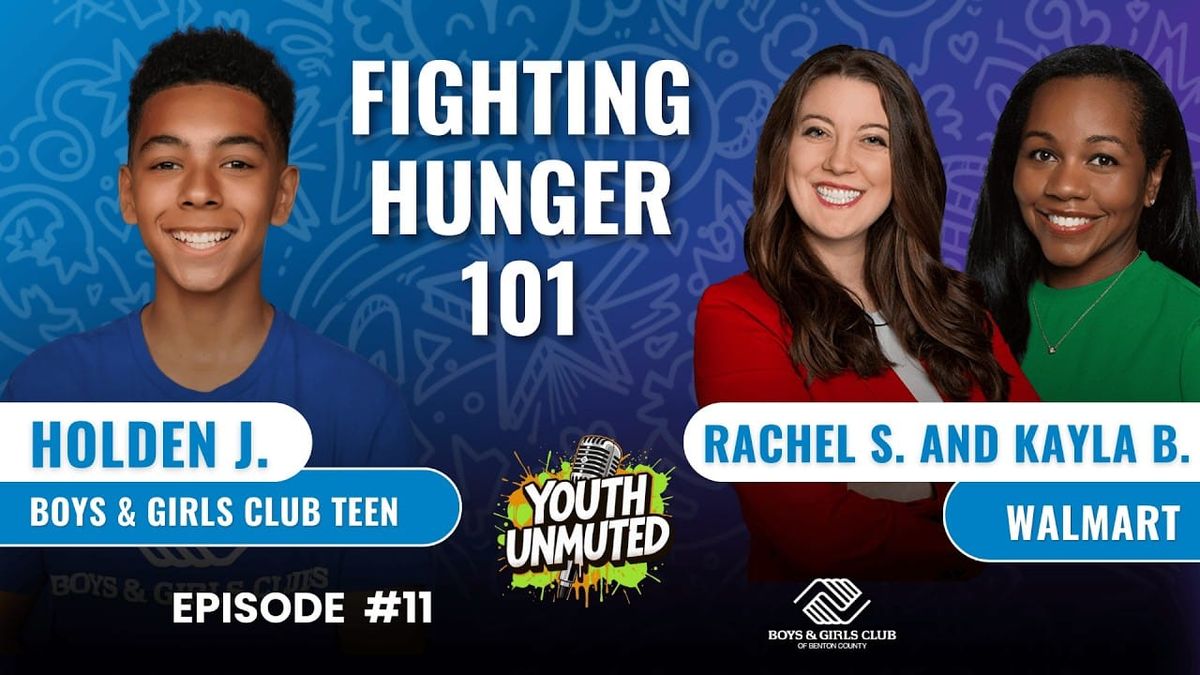
Food insecurity can feel like a problem that belongs to “someone else,” until you realize your community needs you and it needs you now. We’re back for part two with Kayla and Rachel from Walmart, and we get practical about how real hunger relief works on the ground, from your local food bank to the nationwide partnerships that help food reach families.
We talk about simple actions that actually add up: volunteering at a food pantry, showing up consistently, and using campaigns like Walmart's Fight Hunger. Spark Change to turn everyday shopping into support through participating items, register roundups, and online giving connected to Feeding America. We also share the side of corporate philanthropy that people don’t always see, including how much Walmart associates care and how unsold food donations help reduce food waste while supporting local hunger relief.
Then we zoom out to what happens when disaster hits. Kayla and Rachel explain how Walmart disaster relief can bring essentials into a community fast, including services set up in parking lots and partner support that helps people get through the first chaotic days. We also highlight Spark Good programs and grant paths that can help smaller nonprofits, plus volunteer options for introverts who want to contribute with skills like graphic design or application support. If you’ve ever wondered how to help with hunger in Arkansas or where to start with community volunteering, this conversation gives you a clear first step.
Subscribe to Youth Unmuted, share this with a friend who wants to make a difference, and leave a review so more people find the episode.
More About this Episode
The Human Side of Retail: How We Can Fight Food Insecurity Together
Growing up and finding your voice in today's world can feel like an overwhelming task. As a youth advocate and member of the Boys and Girls Club of Benton County, I have seen firsthand how much a supportive community can change a young person's trajectory. The confidence, the personal growth, and the opportunities I have today are a direct result of people choosing to invest their time and resources into my generation. However, it is impossible to talk about youth development without addressing the foundational challenges that hold so many people back. One of the most pressing issues we face in our local neighborhoods, and across the nation, is food insecurity.
It is a heavy topic, but it is a necessary one. We often look at massive global problems and feel paralyzed, wondering how one person could possibly make a dent. The truth is that the fight against hunger does not start with sweeping global legislation. It starts in our own backyards. It starts with local volunteers, grassroots initiatives, and surprisingly, it involves the human side of massive retail organizations stepping up to fill the gaps.
Breaking the Stigma of Hunger with Grassroots Solutions
Food insecurity is incredibly prevalent in our community, and one of the biggest barriers to solving it is the stigma attached to needing help. There is a deep, often silent anxiety and shame that prevents individuals and families from reaching out when their pantries are empty. As advocates, breaking that stigma must be our first priority. We have to normalize the reality that everyone needs a helping hand at some point in their lives.
One of the most beautiful, grassroots solutions I have seen gain traction is the concept of Blessing Boxes. If you are not familiar with them, Blessing Boxes are simple, freestanding cabinets often placed outside of churches, community centers, or local clubs. The premise is beautifully straightforward: give what you can and take what you need. These boxes offer a completely anonymous way for people to access essential food items without having to register, answer questions, or feel the weight of societal judgment. It is a direct, neighbor to neighbor approach that proves how simple acts of kindness can create a safety net for those who are struggling.
The Hidden Corporate Engine for Zero Waste
While grassroots efforts like Blessing Boxes are vital, tackling hunger on a systemic level requires massive logistical power. This is where the intersection of retail and philanthropy becomes fascinating. Many people do not immediately connect a massive retailer like Walmart with localized philanthropic efforts, but the reality behind the scenes is staggering.
One of the most impactful initiatives that rarely makes the front page is the commitment to zero waste food donations. Every single day, retail stores, wholesale clubs, and distribution centers across the country identify food that can no longer be sold but is still perfectly safe and nutritious to eat. Instead of throwing this food away, dedicated teams work to quickly route these items to local food banks and pantries. It is a massive operational undertaking that requires thousands of associates who genuinely care about ensuring that perfectly good food ends up on the dinner tables of local families instead of in a landfill.
Showing Up When Disaster Strikes
The human element of retail becomes even more apparent when natural disasters disrupt our lives. We have all seen the news footage of floods, hurricanes, and unprecedented winter storms. Recently, devastating ice storms hit parts of the South, regions like Oxford, Mississippi that are simply not equipped to handle severe freezing temperatures.
During these crises, retail locations often transform into emergency community hubs. It is incredibly moving to hear stories of associates standing outside in fifteen degree weather for hours on end, doing whatever it takes to ensure the store remains open for people who desperately need supplies. But the support goes far beyond keeping the lights on. In times of disaster, parking lots are often converted into relief zones equipped with mobile showers, portable bathrooms, and emergency Wi-Fi stations to help people contact their loved ones.
The dedication of the logistics teams is truly something to admire. Fleet drivers have been known to assemble cook trailers in the middle of these disaster zones, grilling hot meals for displaced residents and first responders. Whether they are serving up barbecue through partnerships with competitive cooking teams or simply grilling ham and cheese hot pockets for breakfast to keep the crew fueled, these associates represent the true heart of community service. They put a human face on a corporate badge, proving that the desire to help your neighbor is a universal drive.
Empowering the Community Through Spark Good
You do not have to be a massive, national charity to make a difference or to receive support. One of the most effective ways to build community resilience is by empowering the smaller, hyper local nonprofits that know their neighborhoods best. Initiatives like the Spark Good program are designed specifically for this purpose.
These programs allow local organizations to apply for grants directly from their neighborhood retail stores. It democratizes the philanthropic process, ensuring that resources are distributed to the places where they will have the most immediate and profound impact. Whether it is a local animal shelter, a youth development program like the Boys and Girls Club, or a neighborhood food pantry, these localized grants provide the crucial funding needed to keep grassroots efforts alive and thriving.
Redefining Volunteerism for Everyone
When we hear the word volunteer, we often picture standing on a serving line at a soup kitchen or sorting cans in a crowded warehouse. While those physical acts of service are desperately needed, they can also feel intimidating for someone who is shy or naturally introverted.
If you want to get involved but prefer to stay behind the scenes, there is a massive need for your skills. Nonprofits are notoriously understaffed and often lack the resources to handle administrative or digital tasks. If you know how to use basic design software like Canva, you can help a local food bank create compelling graphics for their next food drive. If you are a strong writer, or even if you just know how to effectively use tools like ChatGPT to draft outlines, you can assist a local charity in writing grant applications to secure critical funding. Just remember to carefully proofread everything before you submit it.
The point is that your unique skills are valuable. Whether you are an extrovert organizing a neighborhood food drive or an introvert designing social media posts from your bedroom, you have the power to move the needle on food insecurity.
Finding Balance and Community Connection
Tackling issues like hunger and disaster relief can feel incredibly heavy. That is why it is so important to find moments of levity and connection within our communities. Building a team of volunteers or working alongside retail associates is not just about the work itself; it is about the human connections we form along the way.
To keep things balanced, it is always fun to look at how different we all are, even in the ways we shop. If you were to draft your ultimate survival aisles in a grocery store, your choices say a lot about who you are. As a teenager who loves gaming, my top priorities are always going to be the snack aisle, the frozen food section for easy dinners, and the electronics department. Contrast that with someone who values health and preparedness, who might draft fresh produce, outdoor camping gear, and toys to keep their kids entertained. We all navigate these retail spaces differently, but those shared spaces are what bring us together. Recognizing our differences and having fun with them is what builds the camaraderie necessary to tackle the serious issues.
The Call to Action
The challenges facing our communities are significant, but they are not insurmountable if we choose to work together. We have seasons of giving, such as the Fight Hunger. Spark Change campaigns that typically run from early April through early May, where simply rounding up your total at the register or purchasing specific items triggers a donation to organizations like Feeding America. These moments offer a frictionless way to contribute to the greater good.
However, the need does not disappear when a campaign ends. The most powerful thing you can do today is to reach out to your local food bank, ask them what they need, and offer your time. Volunteer your physical labor or your digital skills. Support the Blessing Boxes in your area. Advocate for those who are struggling and work to erase the stigma of asking for help.
When you invest in your community, you are investing in the future. You are providing the foundation that allows youth to grow, gain confidence, and eventually step up to lead. Let us all take that first step, get involved, and be the change we wish to see in our neighborhoods.