
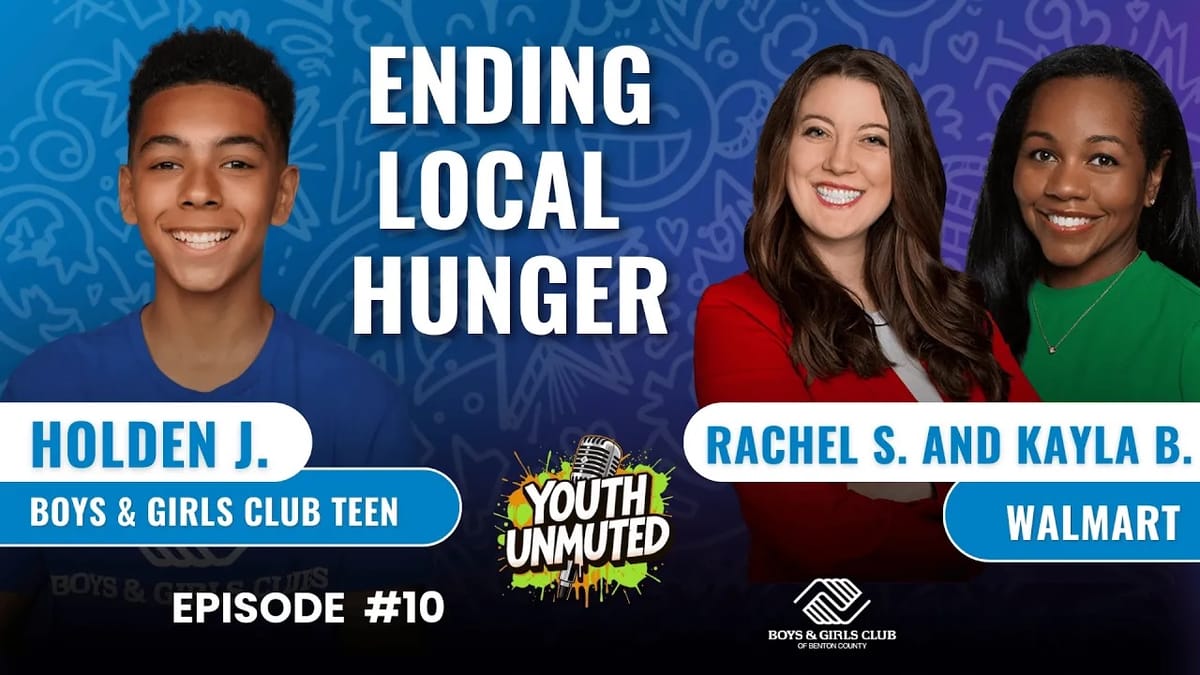
Hunger is not abstract where we live; it shows up in Arkansas families deciding between groceries and gas. We sat down with Kayla Burton and Rachel Spencer from Walmart to unpack how a massive retailer can still act like a neighbor, channeling national scale into local impact. The heart of our talk is proximity, keeping dollars, food, and decision-making close to the people who need them most.
We break down Fight Hunger. Spark Change. Walmart’s long-running partnership with Feeding America that turns everyday shopping into real meals. You’ll hear how a checkout prompt, an online gift, or a box of cereal marked as a participating item can route funds straight to your local food bank. Suppliers play a pivotal role by labeling pantry staples that unlock donations, making it easy for shoppers to support hunger relief without changing their routine.
Beyond fundraising, we dig into the logistics that truly determine whether fresh food reaches tables. Food banks function like regional distribution centers for thousands of pantries and meal sites, and Walmart associates are the hands that pull, sort, and ship still-good food every day. We talk numbers, hundreds of millions of pounds donated annually, and why infrastructure matters: refrigerators, freezers, shelving, and simple tech upgrades that cut waste and speed up delivery. You’ll also hear about pilots that repurpose retail platforms so food banks can notify stores they’re en route, plus the growing role of mobile pantries and the future promise of same-day delivery for access.
What keeps us hopeful is the culture of giving and the willingness to face hard data together. Community leaders, associates, suppliers, and nonprofits are aligning around bold but practical moves; capacity grants, smarter routes, local governance, and year-round collaboration. If you care about food access, you’ll come away with a clear picture of what works now and what could scale next.
If this conversation moves you, share it with a friend, subscribe to Youth Unmuted, and leave a review with one idea you think would improve food access where you live.
More About this Episode
Mobilizing the Giant: How Walmart is Transforming Local Food Access
In the heart of Northwest Arkansas, where the global scale of Fortune 500 retail meets the rugged charm of the Ozarks, there is a conversation happening that is much more important than quarterly earnings or supply chain logistics. It is a conversation about the dinner table, specifically, the thousands of dinner tables in our state and across the country that remain empty.
I’m Holden, and on this week’s episode of the Youth Unmuted podcast, I had the privilege of sitting down with two powerhouses from Walmart, Kayla Burton and Rachel Spencer. We didn't just talk about retail; we dove deep into how the world’s largest grocer is leveraging its massive infrastructure to tackle one of the most pressing issues facing today’s youth and their families: food insecurity.
More Than Just a Retailer: A Community Partner
When you think of Walmart, you think of scale. But for Kayla and Rachel, the mission is deeply personal and local. Rachel, who spent her earlier career studying termite genetics (talk about a fun fact), now helps navigate the complex world of corporate philanthropy. Kayla, a veteran of the company for a decade and a literal ultra-marathoner, brings that same "endurance sport" mentality to the fight against hunger.
The core of Walmart’s mission has always been "Save Money, Live Better." As Rachel pointed out, when Sam Walton founded the company, it was to provide rural America with access to quality goods at affordable prices. Today, that mission has evolved into a sophisticated philanthropic strategy. Walmart focuses on food security because it is the largest grocer in the world. It’s not just "corporate social responsibility," it is a fundamental part of their DNA.
The Stark Reality in Arkansas
We had to address the elephant in the room. As of early 2026, reports indicate that Arkansas remains one of the most food-insecure states in the nation. Nearly 29% of families in our own backyard struggle to put food on the table.
"That number is shocking, but it’s been a persistent issue," Rachel noted. "It’s not a distant problem; it’s happening in our own neighborhoods."
This reality is what fuels the urgency of their signature campaigns. One of the most impactful is the Fight Hunger. Spark Change. campaign. This initiative is a masterclass in frictionless philanthropy. By partnering with Feeding America and its network of 200 food banks, Walmart has turned everyday grocery shopping into a collective act of service. When a customer buys a box of Cheerios or a bag of rice, a donation is unlocked for a local food bank.
The beauty of this model is its localization. Every dollar raised at the register stays in the community where it was donated. It’s not going into a black hole of corporate overhead; it’s going to the food pantry down the street or the soup kitchen at the local church.
Innovation and the "Spinal Cord" of Food Relief
One of the most enlightening parts of our conversation was learning about the logistics of hunger relief. Rachel described food banks as the "spinal cord" of the system. They aren't just warehouses; they are distribution hubs that support over 60,000 local agency partners.
Walmart is treating hunger relief with the same technical rigor they use for their business. They are "people-led and tech-powered." Some of the innovations they are currently testing include:
- Retail Agency Capacity: Investing millions to help local agencies upgrade their infrastructure with refrigerators, freezers, and shelving so they can handle fresh produce.
- Logistics Tech: Testing internal platforms that allow food banks to communicate with stores in real-time about when they are arriving to pick up donations.
- Scale of Impact: Last year alone, Walmart donated 855 million pounds of food globally. To put that in perspective, that is the equivalent weight of eight or nine aircraft carriers.
The Power of Associates
It’s easy to look at a company as a monolith, but Walmart’s impact is driven by its associates. These are the people building the donation boxes in the back of the stores and pulling fresh produce that hasn't sold but is still perfectly good to eat.
Through the Spark Good umbrella, associates are empowered to support the causes they care about. Many of them sit on the boards of local food banks or volunteer their weekends at mobile pantries. In small towns across Arkansas, these associates are our neighbors, our fellow PTA members, and our friends. When they see a need in their community, they have the tools, and the corporate backing, to do something about it.
A Hopeful Outlook
I asked Kayla and Rachel what gives them optimism when the statistics feel so daunting. For Kayla, it’s the "giving culture" she sees in shoppers and suppliers alike. For Rachel, it’s the "tough conversations" happening right now in Arkansas. There is a newfound willingness for leaders from different sectors to come to the table and ask, "What are we missing? Why isn't the needle moving faster?"
As a member of the Boys and Girls Club of Benton County, I see this full circle of support every day. The community supports the Club, and in turn, the Club empowers us to advocate for the community. Food insecurity is a complex, generational challenge, but when you have the world’s largest retailer acting as a local neighbor, the future looks a lot brighter.